
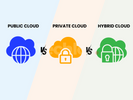
Cloud computing has become an essential part of modern business operations. Organizations increasingly adopt cloud services, cloud applications, and digital transformation to improve flexibility, reduce infrastructure costs, and support digital transformation. As more businesses move to the cloud, choosing between public, private, and hybrid cloud environments has become an important strategic decision.
Understanding the Public Cloud
The public cloud is operated by third-party providers such as AWS, Microsoft Azure, and Google Cloud Platform. Although the physical infrastructure is shared, each organization's data and applications remain logically separated and secure. Public cloud services are widely adopted because they reduce upfront investment, simplify IT management, and allow businesses to scale resources as their needs change.
Understanding the private cloud is a dedicated cloud environment for a single organization. Unlike a public cloud, a private cloud is hosted exclusively for one business, whether it is hosted on-site or managed by an external provider. This model provides greater control, stronger customization, and enhanced security for organizations that handle highly sensitive data or operate under strict regulatory requirements.
Understanding the Hybrid Cloud
A hybrid cloud combines public and private cloud environments into a single integrated solution. This approach allows businesses to keep sensitive workloads in a private cloud while using the public cloud for everything else. Hybrid cloud environments support disaster recovery, backup strategies, and gradual cloud migration, making them a practical choice for organizations that need both security and scalability.
Choosing the Right Cloud Model
Choosing a cloud model depends on an organization's business priorities rather than technology alone. Businesses looking for affordability, rapid deployment, and minimal management overhead tend to favor public cloud services. Organizations that prioritize security, regulatory compliance, and complete control over their IT environment may find a private cloud more suitable.
Organizations should evaluate their current infrastructure, security requirements, compliance obligations, and long-term goals before selecting a cloud model. Proper planning reduces migration risks while ensuring the chosen cloud environment supports both current operations and future growth.
How IT Gallery Helps Businesses Embrace Cloud Technology
IT Gallery helps businesses plan, implement, and manage cloud solutions that align with their operational and strategic objectives. From cloud migration and Microsoft 365 deployment to networking, cybersecurity, backup solutions, and ongoing IT support, IT Gallery delivers comprehensive cloud solutions that improve system reliability, strengthen business continuity, and prepare organizations for future growth.
Final Thoughts
Cloud computing offers businesses the opportunity to become more agile, efficient, and resilient. Whether choosing a public, private, or hybrid cloud model, organizations can improve operational efficiency, strengthen cybersecurity, and support long-term growth. With expert guidance and cloud solutions from IT Gallery, businesses can confidently adopt the right cloud strategy while maintaining security, reliability, and future readiness.
Frequently Asked Questions
What is the difference between public, private, and hybrid clouds?
A public cloud uses shared infrastructure for multiple customers; a private cloud is dedicated to one organization; a hybrid cloud combines both. The right choice depends on each organization's priorities.
Which cloud model is best for small businesses?
Many small businesses benefit from public cloud services because they offer lower costs, easy scalability, and minimal management overhead.
Why should businesses seek professional cloud migration?
Professional migration helps ensure proper licensing, secure configuration, successful data migration, and smooth integration with existing business systems.


