
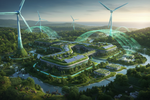
The Rise of Green IT: Sustainable Technology Practices for Modern Businesses
, by Admin Account, 4 min reading time
, by Admin Account, 4 min reading time
Sustainability is no longer just an environmental initiative, it has become a strategic business imperative. In 2026, organizations are increasingly adopting Green IT practices to reduce environmental impact, optimize costs, and meet regulatory and stakeholder expectations.
At IT Gallery, we help businesses design and implement sustainable technology solutions that balance performance, innovation, and environmental responsibility.

Data centers remain the backbone of digital operations, but they are also among the largest consumers of energy. In 2026, energy-efficient data center strategies are critical to achieving sustainability goals without compromising performance.
Key approaches include:
High-efficiency cooling systems and liquid cooling
AI-driven energy management and workload optimization
Use of renewable energy sources
Virtualization and server consolidation
By modernizing data center infrastructure and optimizing workloads, organizations significantly reduce power consumption, operating costs, and carbon emissions.

Green IT goes beyond hardware and infrastructure. In 2026, carbon-aware software development is emerging as a powerful way to reduce environmental impact at the application level.
Carbon-aware software focuses on:
Optimizing code for lower CPU and memory usage
Scheduling workloads during low-carbon energy periods
Reducing unnecessary data processing and storage
Leveraging efficient algorithms and architectures
By embedding sustainability into software design, businesses can lower energy consumption while improving application performance and scalability.

Hardware decisions play a major role in Green IT strategies. Modern businesses in 2026 are prioritizing eco-friendly hardware that supports energy efficiency, durability, and responsible sourcing.
Sustainable hardware practices include:
Energy-efficient processors and components
Modular and upgradable device designs
Extended hardware lifecycle management
Responsible e-waste recycling and disposal
IT Gallery helps organizations select and manage hardware solutions that align with sustainability targets and long-term operational efficiency.

Cloud platforms are increasingly offering sustainability-focused tools and services. By adopting green cloud strategies, businesses can reduce their environmental footprint while benefiting from scalable infrastructure.
Best practices include:
Selecting cloud regions powered by renewable energy
Right-sizing workloads to avoid over-provisioning
Using serverless and containerized architectures
Monitoring carbon impact through sustainability dashboards
Hybrid cloud models further enable organizations to balance performance, cost, and environmental responsibility.
Green IT is closely tied to environmental, social, and governance (ESG) goals. In 2026, businesses must demonstrate transparency, accountability, and measurable sustainability outcomes.
Key focus areas:
Sustainability reporting and metrics tracking
Regulatory compliance and environmental standards
Vendor and supply-chain sustainability evaluation
IT Gallery supports organizations in aligning IT operations with ESG frameworks and long-term sustainability objectives.
The rise of Green IT reflects a shift toward responsible innovation. Energy-efficient data centers, carbon-aware software, and eco-friendly hardware are no longer optional, they are essential for future-ready businesses.
At IT Gallery, we partner with organizations to build sustainable IT ecosystems that deliver performance, resilience, and environmental impact.
Because the future of technology must also protect the future of our planet.


Subscribe to our emails